Blinds & Blind Gear Guide
How to Hide a Layout Blind in Snow or Short Cover
Profile height gets you most of the way there. The rest is matching cover and killing shadow.
We may earn a commission when you buy through links on this page, at no extra cost to you. It never decides the ranking: the scoring method is published. How we're funded
How to actually hide the blind
Shadow gives away more blinds than color does. In one Ducks Unlimited account of a goose hunt, the group built sloping burlap panels around each set of blinds to reduce sharp angles and unnatural shadows, extending the panels three to five feet out and pinning them down with decoys on motion stakes instead of leaving the blind's sides vertical. They matched the cover to the field itself, applying cornstalks and bean stubble "to match what the rest of the field looked like," and set a few extra decoys around the blinds specifically to break up any shadow the panels didn't catch. Mesh screens over the shooting windows hid their faces on the final approach.
A second account from Ducks Unlimited describes rice-field and pond-edge setups: hunters built stubble mounds and then covered the blinds with rice stubble pulled from one of the mounds, or tucked blinds under the lip of a pond edge to reduce their profile and covered them with raffia grass color-blended to the vegetation around it. Both hunters also mentioned the basics that cost nothing: keep the sun and wind at your back so glare and movement work for you, not against you.
None of this replaces a blind that already sits low. Pair the cover work above with a blind whose stubble straps or CamoStrap rows are actually built to hold real vegetation; see best layout blinds for which ones publish that feature.
Placement matters as much as cover
Where you set a group of blinds can do as much work as what covers them. In the same Ducks Unlimited account, the hunters kept their group small on purpose, saying "we'd limit the number of hunters to just three or four," and positioned multiple blinds in clusters facing downwind toward the landing zone rather than head-on to incoming birds. That reduces both the visual footprint of the group and the chance a bird flares off one exposed edge before committing. It's a decision to make before you ever brush a single blind in, not after.
Hiding a blind in snow
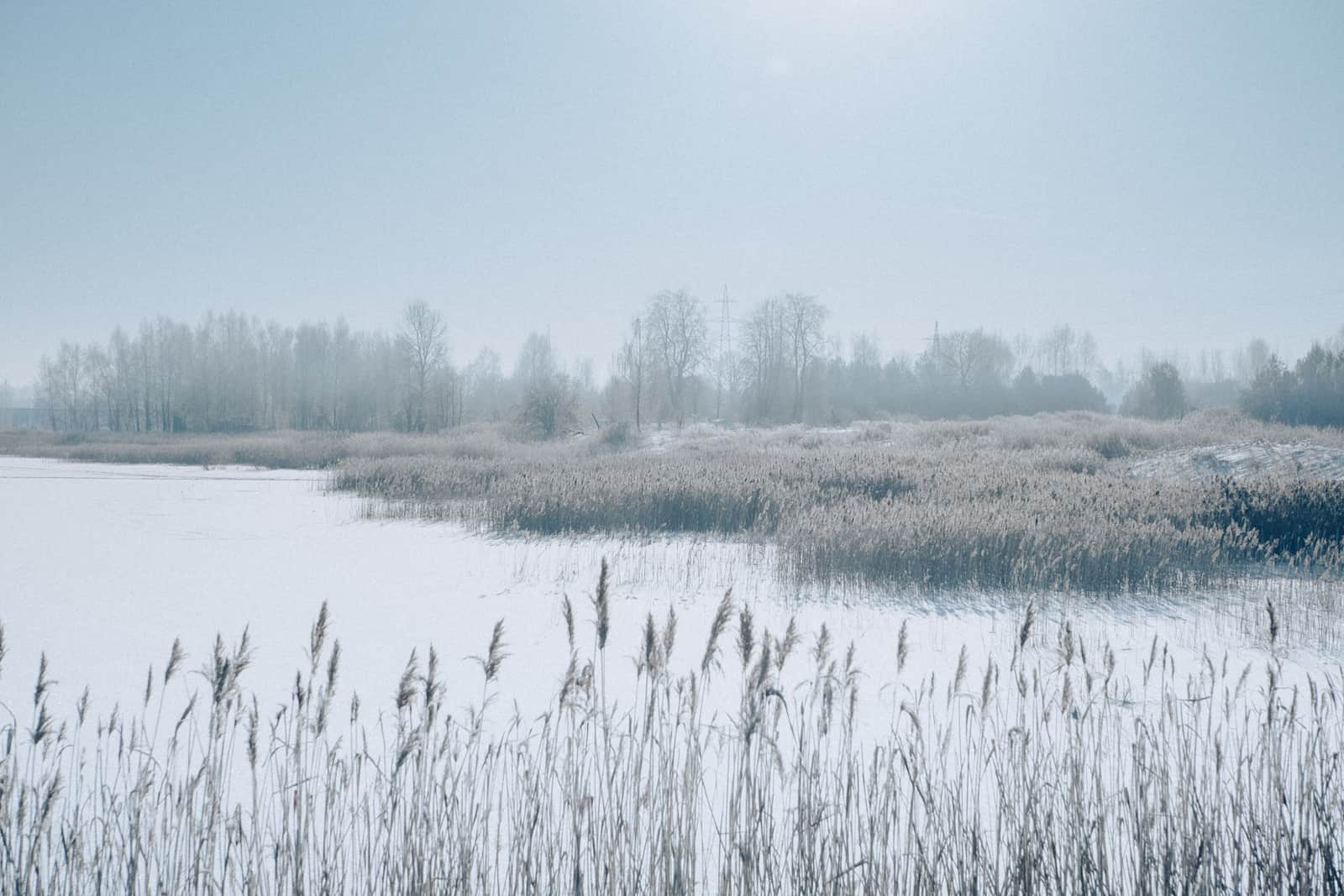
Snow removes the cover most concealment tips above depend on. Ducks Unlimited's own guidance for hunting through snow keeps it simple: setting blinds up in a natural depression in the field or along a grassy field edge can help break up their outlines, even under snow. For a fully white background, the same source notes that some hunters skip a camo blind's cover entirely and go old school, wearing white bibs and coats the way hunters did before layout blinds existed. If you'd rather keep the blind, a swappable cover built for the season is the gear-side answer: the Rig'Em Right Xtreme Ghillie Layout Blind ships with a Prairie cover and sells snow and Field Green covers separately, so the same blind frame carries you from stubble into snow.
What to look for in the blind itself
A few published features do real concealment work before you add anything yourself: a low profile height (12 inches on the lowest blind we've reviewed versus 18 on a full-frame model), rows of stubble straps or CamoStrap sized to hold real vegetation, a mesh face screen so your face isn't the one uncovered thing left, and, for hunters who see snow, a cover system built to swap rather than one fixed camo pattern.
How we picked
Scored on paper, and we say so
Most gear sites say they tested everything. We didn't test these, and we say so. Every pick is scored from the maker's published specs, manuals and warranty terms on a rubric we publish, and the sources are listed at the bottom of the page.
Scores are editorial judgments from that published information, not field or lab results. Nobody pays for placement, and an unpublished spec is never guessed upward. See every rubric and weight.
Layout & A-frame blinds rubric
- Concealment features
- 30%
- Comfort
- 20%
- Weight & portability
- 20%
- Door & visibility design
- 15%
- Warranty
- 15%
FAQ
Questions hunters ask
How do you hide a layout blind in snow?
Do I need a special blind for short grass or stubble?
What is a stubble strap for?
Should I use real vegetation or a fabricated cover to hide a layout blind?
Do decoys help hide a layout blind?
Related
Keep reading
Update log
What changed
- First published.
Receipts
Sources
- 1.Ducks Unlimited: Concealment Secrets (accessed Sep 2026)
- 2.Ducks Unlimited: Snow Season (accessed Sep 2026)
- 3.Ducks Unlimited: Ground Game - Layout Blinds (accessed Sep 2026)
- 4.Rogers Sporting Goods: Goosebuster Low-Profile 2.0 Layout Blind product page (checked Sep 19, 2026)
- 5.Rig'Em Right: Xtreme Ghillie Layout Blind product page (checked Sep 19, 2026)
- 6.Final Approach: X-Land'R Layout Blind product page (checked Sep 19, 2026)
We don't field-test decoys, calls, waders or blinds, and we don't pretend to. Specs, materials and warranty terms come from the maker's own pages and manuals (or a named retailer's listing where the maker doesn't publish them). Regulations are linked to the agency that writes them. Prices are set by Amazon and change often, so we don't print them. Where a figure isn't published, we say so. Read the full method.