Blinds & Blind Gear Guide
How to Set Up a Layout Blind
Placement first, brushing second. Where the blind sits relative to wind, sun and the hole decides more than any amount of stubble does.
We may earn a commission when you buy through links on this page, at no extra cost to you. It never decides the ranking: the scoring method is published. How we're funded
The order to do it in
Hunters spend most of their setup time on the last step and almost none on the first, which is backwards. A perfectly brushed blind in the wrong place gets skylined by every bird that circles; a lightly brushed blind in the right place kills geese. Do it in this order: placement, depth, fit, then concealment.
That is the whole argument of this page. Everything below is the detail.
Step 1: wind, sun and the hole
Wind decides the axis. Birds land into the wind, so they will approach from downwind of wherever they intend to touch down. Lie with your feet pointed into the wind, or slightly off it, and put the landing hole fifteen to twenty-five yards off your toes. Geese then work from behind your feet toward your face, which keeps them in front of your gun and out of your peripheral vision for as long as possible.
Sun decides the detail. Put the sun at your back if the wind lets you. Two reasons: you are not squinting into it at the moment you need to pick a bird, and your blind casts its shadow away from the approach rather than toward it. If sun and wind conflict, take the wind — birds will not land downwind to accommodate you, but you can shoot into glare.
Position in the spread decides whether you get skylined. A layout blind is a lump, and lumps belong where lumps already are. Set it inside the spread with decoys tight around it rather than in a clean gap, slightly off the upwind edge of the hole, and never on the only bare patch in the field. Cross-check it from the air by walking fifty yards downwind and looking back from a crouch — if you can see a blind-shaped outline, so can a goose.
For how the hole and the blind relate to the rest of the field spread, see how to build a goose decoy spread. For the blind-versus-blind decision before you get this far, see layout blind vs A-frame blind.
Step 2: get it low
Published blind heights are the number that matters here, and they vary more than people expect. The Final Approach X-Land'R publishes 14 inches of height, the Rogers Goosebuster Low-Profile 2.0 publishes 12 inches unfolded, and the ALPS OutdoorZ Legend publishes a 17-inch maximum setup height. In a picked cornfield with eight inches of stubble, every one of those is taller than the cover.
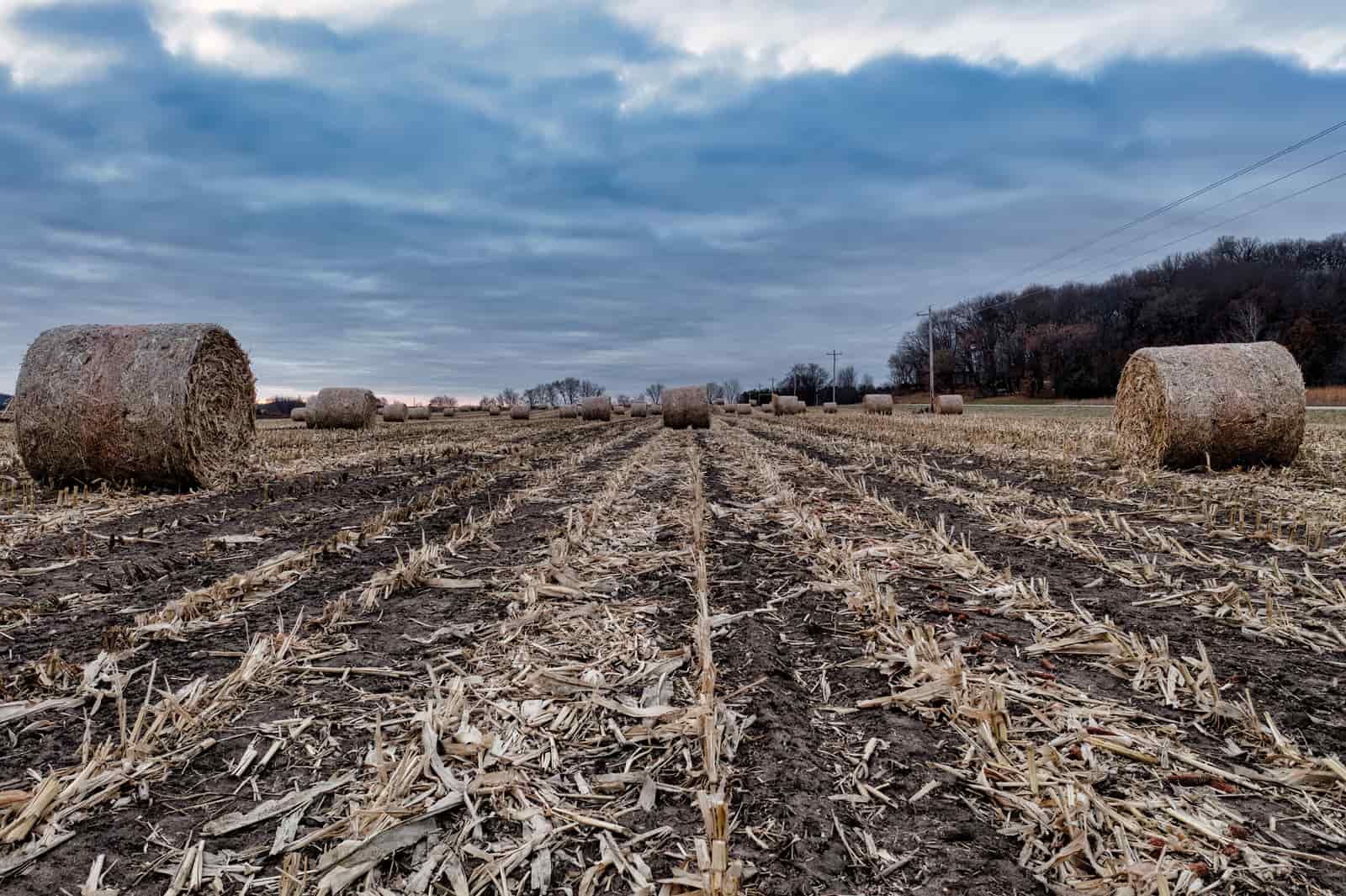
So you lower it. In soft ground, scrape a shallow depression with a shovel or a boot heel — two to four inches is enough to change the silhouette completely — and pile the spoil along the upwind side as a berm you then brush. In frozen or hard ground where digging is not an option, set the blind in the deepest existing cover you can find: a dead furrow, a ditch lip, the shadow line of a fence row, a band of unpicked stubble.
Snow changes the job entirely. A layout blind in snow is a dark hole in a white field, and the fix is white cover rather than more grass — that is the subject of how to hide a layout blind in snow or short cover, which covers the concealment half of this process in depth.
Once it is low, brush it from the inside out: fill the stubble straps with material from the field you are hunting rather than material you brought, work from the center of the blind outward so the edges blend into surrounding cover, and leave nothing standing proud of the doors. Material matters — best duck blind grass covers what to buy when the field has nothing to offer.
Step 3: set the seat and the doors
This is the step nobody does, and it is the one that decides whether you can actually shoot.
Backrest angle. Set it as upright as you can stand to lie against for two hours. Too flat and you cannot see birds working until they are overhead; too upright and your head sits above the blind line. The test: lie down, close the doors, and look through the mesh at the horizon. If you can see the skyline at the top of your vision without lifting your head off the rest, the angle is right. The ALPS Legend publishes a zero-gravity chair with a 32-inch backrest and a padded headrest, which is the most adjustable seat on this page.
Door tension and clearance. Open and close the doors three times before the first flight. Doors that catch on brushing, on a jacket hood or on a shell loop are the single most common reason a layout hunter misses the shot, and all three blinds here publish a different door design: the X-Land'R uses structured doors, the Goosebuster uses no-frame doors with a 22-inch cockpit opening, and the Legend uses zippered flag doors with a mesh face screen.
Gun position. Lay the gun along your body with the muzzle past your feet and the action where your hand falls naturally, not across your chest. Mount it once, dry, with the doors open, and move whatever it hits.
Everything else out of the cockpit. Shells in a loop or a bag within reach, not loose. Blind bag outside the blind or under your knees, never beside your shooting elbow — see blind bag checklist. If you are tall or broad, the cockpit dimensions published for each blind are the spec to check first, and best layout blinds for big guys ranks them on exactly that.
Step 4: shooting out of it
Shooting from a layout blind is a different motion from shooting on your feet, and it is worth rehearsing in the yard before the season rather than discovering it on a flock of honkers.
The sequence is: doors, sit, mount, shoot. Push the doors open with your forearms or shoulders rather than your hands, sit up from the waist, then mount the gun once you are upright. The common error is trying to mount while still lying down, which puts the stock under your armpit and the barrel into the door frame.
Wait longer than feels right. A layout blind is hidden until it opens, so the opening is the moment you give the hunt away — and birds at thirty yards and closing give you time that birds at sixty do not. Let the caller or the designated hunter make the call, and have everyone sit on the same word every time.
Mind your arc. In a line of layout blinds, each hunter owns the airspace in front of their own feet and nothing past the person next to them. Set that out loud before you lie down, not in the moment.
Blinds that set up fast
If you are shopping, the specs that make setup easier are a low published height, backpack straps so the blind gets to the spot without a sled, and a seat you can adjust. These three publish all of that.
The full ranking is in best layout blinds, and if you are still deciding between blind types, start at types of duck blinds.
Five setup mistakes
Setting up on the clean spot. Bare ground is where a blind shows most. Find cover first, then place the spread around the blind rather than the blind around the spread.
Brushing with material from somewhere else. Green grass in a brown field, or cornstalks in a bean field, reads as wrong from above even when the shape is right. Brush with what is under your feet.
Leaving the blind flat. A fully reclined backrest means you cannot see a bird until it is on top of you, and that is when hunters lift their heads — which is the movement geese see.
Never closing the doors during setup. Doors that will not open smoothly are discovered at the worst possible moment. Work them three times before legal light.
Forgetting the walk out. A blind with backpack straps and a published weight under fifteen pounds is a different piece of equipment from a 25-pound blind you drag. Both X-Land'R and the Goosebuster publish straps and roughly 12 pounds; the Legend publishes 25 pounds and a chair you will be glad of once it is there.
How we picked
Why these made the list
Every pick here is researched and compared against the maker's published specs, manuals and warranty terms, scored on a rubric we publish, with each source linked at the bottom of the page.
The weights below are the ones each score was actually computed with, and they hold on every page a product appears on, so the order you see is the order the numbers give. Nobody pays for placement. See every rubric and weight.
Layout & A-frame blinds rubric
- Concealment features
- 30%
- Comfort
- 20%
- Weight & portability
- 20%
- Door & visibility design
- 15%
- Warranty
- 15%
FAQ
Questions hunters ask
How do you set up a layout blind?
Which way should a layout blind face?
Do you have to dig in a layout blind?
How far should a layout blind be from the decoys?
How do you shoot out of a layout blind?
Related
Keep reading
- How to hide a layout blindThe concealment half, in snow and short cover.
- Best layout blindsThe full ranking, on published specs.
- Are layout blinds waterproof?What the fabric specs actually promise.
- How to build a goose decoy spreadWhere the hole goes relative to the blind.
- Best duck blind grassWhen the field has nothing to brush with.
- Best layout blinds for big guysCockpit dimensions, ranked.
Update log
What changed
- First published.
Receipts
Sources
- 1.Final Approach: X-Land'R Layout Blind product page (checked Sep 19, 2026)
- 2.Final Approach: Product Warranties page (checked Sep 19, 2026)
- 3.Rogers Sporting Goods: Goosebuster Low-Profile 2.0 Layout Blind product page (checked Sep 19, 2026)
- 4.ALPS OutdoorZ: Legend Layout Blind product page (checked Sep 19, 2026)
Specs, materials and warranty terms come from the maker's own pages and manuals (or a named retailer's listing where the maker doesn't publish them), and every one is linked above. Regulations are linked to the agency that writes them. Prices are set by Amazon and change often, so the current number lives on the buy button rather than in the copy. Read the full method.