Kits by Season & Flyway Kit
Early-Season Teal Gear
Teal move south while the water is still warm and most other ducks are still on the breeding grounds. That means a smaller spread, subtler motion and lighter gear than the rest of the season calls for.
We may earn a commission when you buy through links on this page, at no extra cost to you. It never decides the ranking: the scoring method is published. How we're funded
Why teal come first
Per Ducks Unlimited's blue-winged teal profile, blue-wings are "late summer to early fall migrants, often departing breeding areas in August or early September," well ahead of most other dabbling ducks. Green-winged teal follow a few weeks later: Ducks Unlimited describes them as "mid-fall migrants, departing breeding areas from September to October", and notes they are "the smallest dabbling duck in North America." Both species favor the same kind of water: DU lists blue-wings as preferring "shallow freshwater wetlands with abundant invertebrates" and "shallow emergent wetlands," not the big open water that later-arriving divers and mallards use. That combination, first birds in, smallest water, is what separates an early-season kit from everything else on this site.
Because most teal move through before the main flight arrives, some states run a separate early season inside their own federal framework specifically for this window, alongside the regular season described on the season guide. The U.S. Fish and Wildlife Service sets that framework each year through its adaptive harvest management process, organized by the four administrative flyways, and each state then decides whether to run an early teal season and what its actual dates and limits are. This page does not state any of those numbers; check your state wildlife agency for the current season.
The water and the spread
Per Ducks Unlimited's early-season teal tactics, teal work "marshes, swamps, farm ponds, river backwaters, mudflats on large lakes and reservoirs, and sheet water in fields," and the same source notes that "early-season teal aren't particularly wary," so an elaborate blind setup usually isn't necessary: natural vegetation is normally enough, provided you stay in full camo and hold still as birds work in. That combination of small water and low-pressure birds is why an early-season spread runs smaller than a regular-season mallard spread; see how many duck decoys you actually need for how spread size scales by water type and season phase.
| Species | Fall migration timing (per Ducks Unlimited) | Size (per Ducks Unlimited) |
|---|---|---|
| Blue-winged teal | "Late summer to early fall migrants, often departing breeding areas in August or early September" | Size not published on the cited page |
| Green-winged teal | "Mid-fall migrants, departing breeding areas from September to October" | "The smallest dabbling duck in North America": drakes average 14.7 in. and about 0.7 lb |
The two species overlap but don't move on exactly the same clock, which is part of why an early-season spread often runs longer than a single opening weekend: blue-wings tend to clear out first, and green-wings follow over the following weeks. A kit built around teal has to work for both.
Reading the weather, not the calendar
Per Ducks Unlimited's early-season tactics, "the weakest cold front can push blue-wings into or out of a given area," which means a pothole that held birds last week can be empty by the weekend, and a pond that had nothing can fill up just as fast. That volatility is why early-season teal hunting rewards scouting close to your actual hunt date over a permanent setup at one spot. A kit built around a dozen or two decoys that pack into a single bag, plus a hip boot or light wader instead of a full chest wader, is built to move with the birds rather than anchor you to water that may not be holding them anymore.
Calling matters less here than it does later in the season, too. The same source notes that a blue-winged teal call, or even a standard mallard call, is usually enough to turn working birds on low-pressure early water; elaborate calling sequences built for pressured regular-season ponds aren't necessary yet. That's one more reason this kit stays lean: the categories that earn their keep are the ones tied directly to small water and light gear, not a wider lineup of calls and calling accessories.
Teal decoys
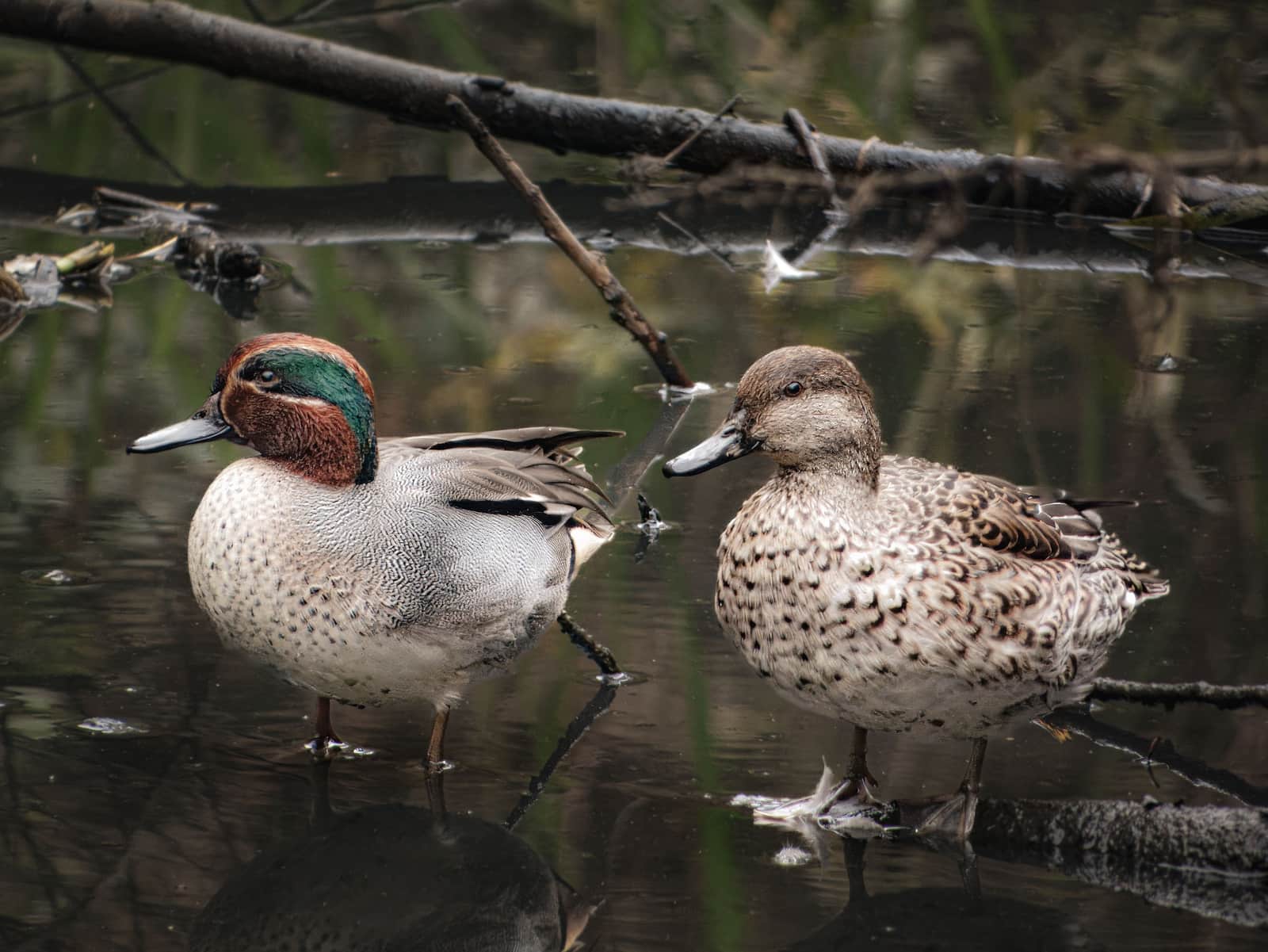
The same source recommends decoying with mostly or all hens, since "drakes and hens are difficult to distinguish during eclipse plumage" this early in the season, scattered "randomly or in small groups on the upwind side" of your spot rather than in a tight formation. Full-size duck decoys built for mallards read wrong on skinny early-season water; teal-specific decoys, sized down and often sold as all-hen packs, are the better match.
Motion and carry
DU also calls spinning-wing decoys "very effective" for pulling distant flocks into small water, but a dozen-decoy teal spread doesn't need the biggest motion unit on the market, a small ripple among the floaters reads as more natural on a farm pond than a full-size spinner built for open marsh. See our best motion decoys for the full range, including the bigger units built for later, larger spreads.
What to wear in warm water
Warm water and mild mornings are the other thing that separates early teal from the rest of the season: the insulated neoprene that makes sense once ice edges into the picture is unnecessary weight in September. See neoprene vs. breathable waders for the full tradeoff; for early teal water specifically, the lighter end of that comparison wins.
Check your state
Nothing on this page states a season date, a bag limit or a shooting hour, on purpose. Whether your state runs a separate early teal season, what it allows and when it opens are all set at the state level inside the federal framework linked above. Confirm the current rules with your state wildlife agency before you hunt.
Situation notes by water type
Per Ducks Unlimited, teal work "marshes, swamps, farm ponds, river backwaters, mudflats on large lakes and reservoirs, and sheet water in fields," and the right gear shifts a little across that list. A farm pond or a flooded field you can walk the bank of is a hip boot situation: the picks above assume you can stay in a foot or two of water most of the morning. A mudflat on a big reservoir, or a marsh where you need to wade out further to reach working birds, is where the breathable chest wader with a removable liner earns its place instead; it's the same warm-weather gear philosophy, just with more coverage for deeper water. Either way, the spread itself stays small: DU's advice to scatter decoys "randomly or in small groups" applies whether you're set up on a farm pond or a flooded field.
River backwaters and slow sloughs are a middle case. They're usually shallow enough for a hip boot, but current and mud can make a wading belt and a longer glove, like the 18-inch gauntlet above, more useful than on still water, since you're more likely to be reaching down into moving water to reset a decoy that's drifted.
Who should skip this kit
Skip this kit if you're gearing up for mallards, divers or big open water rather than teal specifically; start with best duck decoys and best duck hunting waders instead, since a teal-scale spread and a hip boot are the wrong tools for that water. Skip it too if your state and flyway don't run a separate early season for teal at all, in which case your gear planning should start from the regular season and whichever flyway kit matches your water instead of this one. And once ice starts showing up on the edges of that same pond months later, this kit's light, warm-weather gear is no longer the right call; see late-season duck hunting gear for what changes.
How we picked
Scored on paper, and we say so
Most gear sites say they tested everything. We didn't test these, and we say so. Every pick is scored from the maker's published specs, manuals and warranty terms on a rubric we publish, and the sources are listed at the bottom of the page.
Scores are editorial judgments from that published information, not field or lab results. Nobody pays for placement, and an unpublished spec is never guessed upward. See every rubric and weight.
Duck & goose decoys rubric
- Realism features
- 25%
- Durability & construction
- 25%
- Rigging & motion options
- 15%
- Packability & weight
- 20%
- Warranty & parts
- 15%
Motion decoys rubric
- Motion type & adjustability
- 30%
- Power & published runtime
- 20%
- Durability & weather resistance
- 20%
- Setup & portability
- 15%
- Warranty
- 15%
Decoy & blind bags rubric
- Capacity & compartments
- 30%
- Material & waterproofing
- 25%
- Carry system
- 25%
- Durability & warranty
- 20%
Waders rubric
- Waterproof construction
- 25%
- Warmth
- 20%
- Fit range
- 20%
- Boot
- 20%
- Warranty & repair
- 15%
Jackets, gloves, boots & layers rubric
- Waterproof & windproof spec
- 25%
- Insulation spec
- 25%
- Waterfowl-specific features
- 20%
- Dexterity & fit range
- 15%
- Warranty
- 15%
FAQ
Questions hunters ask
Can you use mallard decoys for teal?
Why do teal seasons open before the regular duck season?
Do you need waders for early-season teal?
How many decoys do you need for an early-season teal spread?
Is early teal season the same everywhere?
Related
Keep reading
- Best duck decoysThe full lineup, including teal-scale packs.
- How many duck decoys you needSpread size by water and season.
- Neoprene vs. breathable wadersWhy lighter wins in warm water.
- Late-season duck hunting gearThe opposite end of the season: ice and insulation.
- Waterfowl hunting season guideHow early, regular and late season fit together.
Update log
What changed
- First published.
Receipts
Sources
- 1.Ducks Unlimited: Blue-winged Teal waterfowl ID (accessed Sep 19, 2026)
- 2.Ducks Unlimited: Green-winged Teal waterfowl ID (accessed Sep 19, 2026)
- 3.Ducks Unlimited: Waterfowler's Notebook, Teal Time (accessed Sep 19, 2026)
- 4.U.S. Fish and Wildlife Service: Adaptive Harvest Management (accessed Sep 19, 2026)
- 5.U.S. Fish and Wildlife Service: Migratory Bird Program Administrative Flyways (accessed Sep 19, 2026)
We don't field-test decoys, calls, waders or blinds, and we don't pretend to. Specs, materials and warranty terms come from the maker's own pages and manuals (or a named retailer's listing where the maker doesn't publish them). Regulations are linked to the agency that writes them. Prices are set by Amazon and change often, so we don't print them. Where a figure isn't published, we say so. Read the full method.