Kits by Season & Flyway Kit
Gear for Mississippi Flyway Ducks
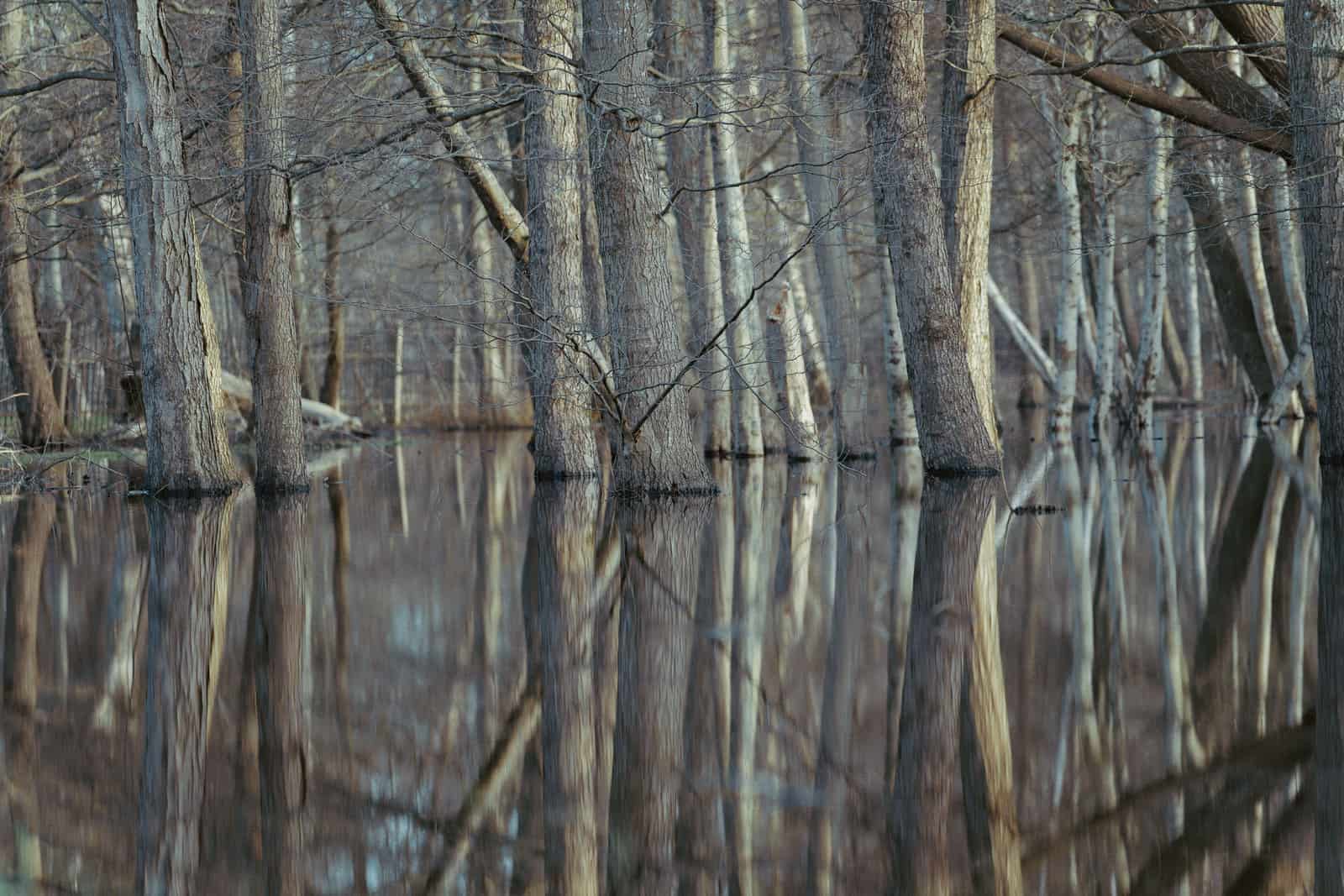
Thirteen states built around the continent's biggest mallard wintering ground. The gear that earns a place here is built for flooded timber, not open bays or dry fields.
We may earn a commission when you buy through links on this page, at no extra cost to you. It never decides the ranking: the scoring method is published. How we're funded
The Mississippi Flyway
Per Ducks Unlimited, the Mississippi Flyway "spans more than 2,300 miles" through 13 U.S. states, Alabama, Arkansas, Illinois, Indiana, Iowa, Kentucky, Louisiana, Michigan, Minnesota, Mississippi, Missouri, Ohio, Tennessee and Wisconsin, plus the Canadian provinces of Saskatchewan, Manitoba and Ontario, and DU calls it "the most heavily used migration corridor for waterfowl and other birds" in North America.
The reason the whole flyway reads as a mallard flyway is one region inside it: the Mississippi Alluvial Valley. Per Ducks Unlimited, the MAV is "the continent's most important wintering habitat for mallards and wood ducks," historically some 10 million hectares of oak-dominated bottomland hardwood forest that floods each winter and feeds birds on acorns and other hard mast. Research DU cites estimates "at least 1.1 and perhaps <4 million mallards" winter in the MAV in some years, representing 17 to 40 percent of the mid-continent breeding population. Only about 20 percent of the original forest remains, which is why the flooded timber that's left concentrates birds, and hunters, more tightly than open water does. See duck decoy spreads for how spread shape changes in tight timber holes versus open water, and how many duck decoys you need before you buy more than a timber hole can hold.
Decoys for flooded timber
A timber-hole spread is smaller and closer than a big-water rig, and every decoy in it has to survive being carried in on foot through standing water and stumps. Light, packable floaters with a flocked head read better in the low light under a canopy than a bulk-painted decoy does, and a detailed mixed-posture pack covers the small numbers a tight hole actually needs. See our best duck decoys.
Motion for still water
Flooded timber and backwater sloughs rarely have wind or current to move a spread, so motion has to come from the decoy itself. A no-wind water motion decoy rated for shallow water earns its place in a timber hole in a way a battery-hungry spinning wing doesn't. See our best motion decoys.
A call for the timber hole
Finishing mallards through a hole in the canopy is close, controlled work, not the long-range hailing a big bay demands. A single reed with medium volume and an easy blow suits the last 20 yards of a timber hole better than a call built to carry across open water. See our best duck calls and single reed vs. double reed.
Waders sealed for stumps and mud
Walking into a timber hole means stepping over submerged roots and stumps on a soft bottom, which is harder on seams than standing in open bay water. Neoprene with a welded seam on every seam, inside and out, holds up to that better than a lighter breathable wader built for walking, not wading through wood. See our best duck hunting waders and neoprene vs. breathable waders.
A bag and a blind that float
Everything you carry into standing timber eventually sits in water, on wet ground or gets set down in the mud, and so does your dog while you wait for the next flight. A blind bag built to float and a dog blind built for water, not a dry field, are worth the difference here. See our best blind bags and best dog blinds.
The spring conservation order in the Mississippi Flyway
Outside the conservation order, the Mississippi Flyway runs on the same federal-framework structure every flyway does; see how the waterfowl season is structured. Early teal push down the flyway's marshes and backwaters ahead of the main mallard flight, so early-season teal gear still applies before timber holes fill, and as the MAV floods deeper and the edges ice over late in the season, late-season duck hunting gear covers what changes. Nothing here states a date, a bag limit or a shooting hour: check your state wildlife agency and the U.S. Fish and Wildlife Service Migratory Bird Program for the current framework.
How we picked
Scored on paper, and we say so
Most gear sites say they tested everything. We didn't test these, and we say so. Every pick is scored from the maker's published specs, manuals and warranty terms on a rubric we publish, and the sources are listed at the bottom of the page.
Scores are editorial judgments from that published information, not field or lab results. Nobody pays for placement, and an unpublished spec is never guessed upward. See every rubric and weight.
Duck & goose decoys rubric
- Realism features
- 25%
- Durability & construction
- 25%
- Rigging & motion options
- 15%
- Packability & weight
- 20%
- Warranty & parts
- 15%
Motion decoys rubric
- Motion type & adjustability
- 30%
- Power & published runtime
- 20%
- Durability & weather resistance
- 20%
- Setup & portability
- 15%
- Warranty
- 15%
Duck & goose calls rubric
- Reed system & ease of learning
- 30%
- Material & build
- 20%
- Tunability & serviceability
- 20%
- Sound range (maker's claim)
- 15%
- Warranty
- 15%
Waders rubric
- Waterproof construction
- 25%
- Warmth
- 20%
- Fit range
- 20%
- Boot
- 20%
- Warranty & repair
- 15%
Decoy & blind bags rubric
- Capacity & compartments
- 30%
- Material & waterproofing
- 25%
- Carry system
- 25%
- Durability & warranty
- 20%
Retriever gear rubric
- Fit & adjustability range
- 25%
- Protection spec
- 25%
- Safety features
- 20%
- Durability
- 15%
- Warranty
- 15%
FAQ
Questions hunters ask
What states are in the Mississippi Flyway?
Why is the Mississippi Flyway known for flooded timber and mallards?
Is the spring conservation order the same in the Mississippi Flyway as elsewhere?
Are electronic duck calls legal in the Mississippi Flyway?
Related
Keep reading
- How the waterfowl season is structuredThe federal framework and season phases, explained.
- Atlantic Flyway gearHow a bay-and-diver kit differs from a timber kit.
- Best duck decoysThe full field of mallard and timber decoys.
- Best duck hunting wadersSealed-seam picks in full.
- Best dog blindsMore concealment options for the dog.
Update log
What changed
- First published.
Receipts
Sources
- 1.Ducks Unlimited: The Mississippi Flyway (accessed Sep 19, 2026)
- 2.Ducks Unlimited: Mississippi Alluvial Valley (accessed Sep 19, 2026)
- 3.Cornell Law School Legal Information Institute: 50 CFR 21.180, Conservation order for light geese (accessed Sep 19, 2026)
- 4.Cornell Law School Legal Information Institute: 50 CFR 20.21, Prohibited methods (accessed Sep 19, 2026)
- 5.U.S. Fish and Wildlife Service: Migratory Bird Program Administrative Flyways (accessed Sep 19, 2026)
We don't field-test decoys, calls, waders or blinds, and we don't pretend to. Specs, materials and warranty terms come from the maker's own pages and manuals (or a named retailer's listing where the maker doesn't publish them). Regulations are linked to the agency that writes them. Prices are set by Amazon and change often, so we don't print them. Where a figure isn't published, we say so. Read the full method.