Kits by Season & Flyway Kit
Gear for Central Flyway Ducks
Ten states from the Dakotas to Texas that split into two different hunts: prairie pothole ducks up north, dry-field geese and playa lakes down south. The kit has to cover both.
We may earn a commission when you buy through links on this page, at no extra cost to you. It never decides the ranking: the scoring method is published. How we're funded
The Central Flyway
The Central Flyway Council counts Montana, Wyoming, Colorado, New Mexico, Texas, Oklahoma, Kansas, Nebraska, South Dakota and North Dakota as members, per Central Flyway Council, along with the Canadian provinces of Alberta and Saskatchewan and the Northwest Territories. Per Ducks Unlimited, the actual flyway boundary only reaches the eastern portions of Montana, Wyoming, Colorado and New Mexico, the part of each state east of the Continental Divide, since water west of the divide drains toward the Pacific Flyway instead. See Pacific Flyway gear for that side of the divide.
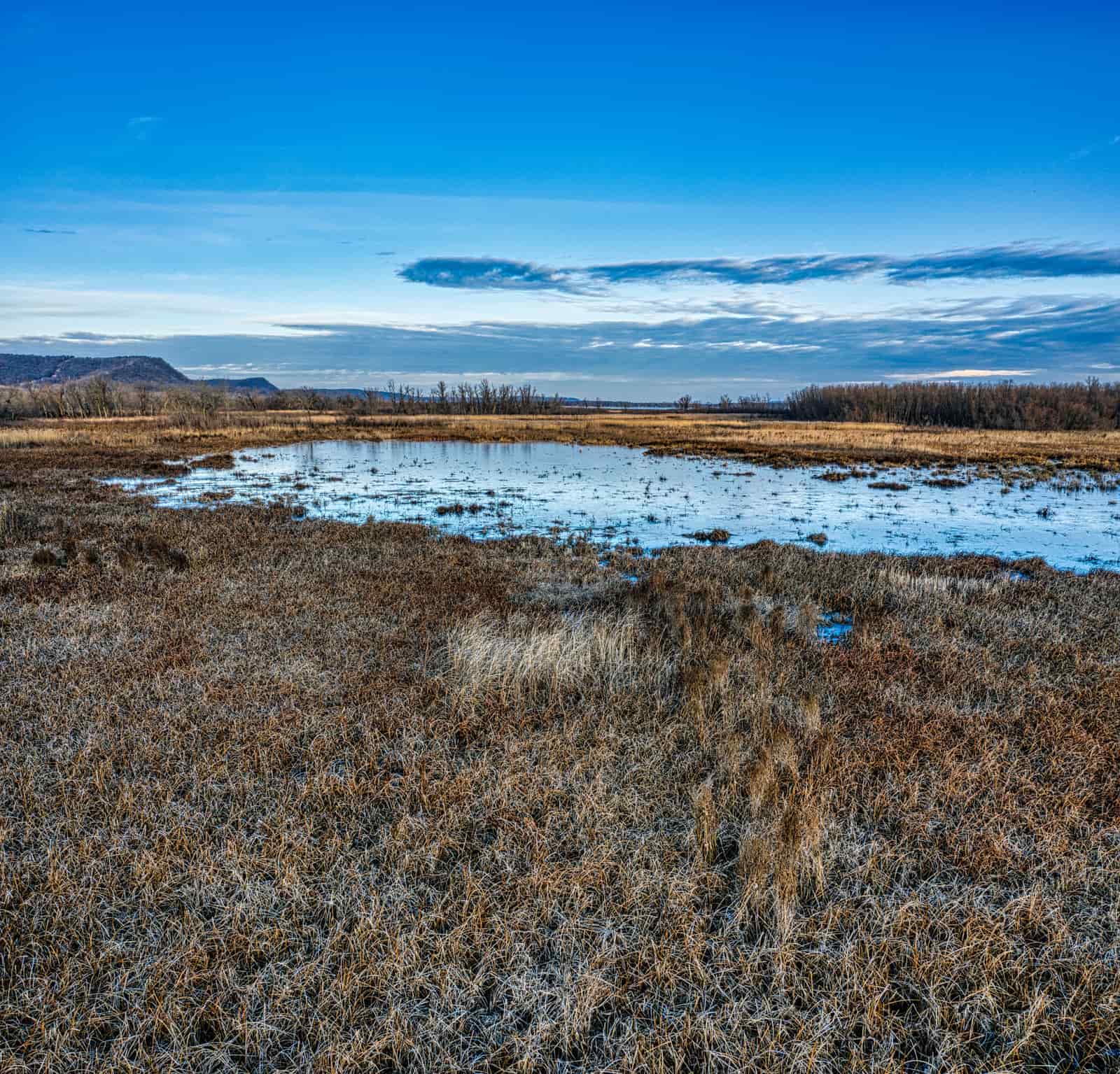
Two habitats do most of the work here. In the north, the Prairie Pothole Region is what DU calls North America's "duck factory": shallow glacial wetlands across the Dakotas and the prairie provinces that produce most of the continent's breeding ducks, including "pintails, mallards, gadwall, blue-winged teal, shovelers, canvasbacks and redheads," per Ducks Unlimited. Farther south, per Ducks Unlimited, the Southern Great Plains' playa lakes are "second in importance only to the Gulf Coast as winter habitat for waterfowl in the Central Flyway," with Canada geese and snow geese the most conspicuous species in winter, and waste grain from field corn a major food source. That mix, breeding potholes up north and wintering field geese down south, is why this kit covers both dry-field goose gear and pothole duck decoys, not one or the other. See goose decoy spreads and how many goose decoys you need for spread sizing in a field.
Full-body and silhouette geese
Field goose hunting on frozen or half-thawed prairie ground means stakes that fight you and a spread that has to look believable from directly overhead, not just from the side. A one-piece full body on a motion base sets faster in hard ground than a stake-mounted decoy, and silhouettes bulk a spread up cheaply once the full bodies are down. See our best goose decoys and silhouette vs. full-body goose decoys.
A call for dry-field Canadas
Working geese into a field spread is a different call job than pulling ducks off open water: more clucking and moaning to hold a flock's attention over decoys, across a full season from early clucks to late-season honkers. See our best goose calls and how to blow a goose call.
A blind that hides in short stubble
Prairie stubble runs shorter than a Mississippi Flyway crop field, which makes a tall layout blind stand out instead of disappear. A low-profile blind you can carry in on your back matters more on open prairie ground than a full-height frame built for tall corn. See our best layout blinds and how to hide a layout blind.
Decoys for prairie pothole water
The same region that breeds most of the continent's ducks also holds early-season local birds on its own potholes before the southbound push starts. A mixed-posture mallard spread reads well on a small, shallow pothole the same way it does on a farm pond farther south. See our best duck decoys and duck decoy spreads.
A dog stand for muddy prairie edges
Prairie potholes and playa lakes both run shallow with soft, muddy margins, which is hard on a dog that sits at the water's edge all morning. A stand that lifts the dog out of the mud, not just off dry ground, earns its keep here. See our best dog stands.
Staying warm in a dry field
A dry-field goose sit is a different kind of cold than standing in water: no insulation from the water itself, more wind across open ground, and a long walk in before shooting light. Boots rated for a wide temperature range and a dexterity-focused glove built for a dry, cold field matter more here than waterproofing built for wading. See our best duck hunting boots and best waterfowl hunting gloves.
The spring conservation order in the Central Flyway
Outside the conservation order, the Central Flyway runs on the same federal-framework structure every flyway does; see how the waterfowl season is structured. Blue-winged teal move through prairie potholes early, ahead of the main flight, so early-season teal gear still applies up north, and once playa lakes and stubble fields freeze hard down south, late-season duck hunting gear covers what changes. Nothing here states a date, a bag limit or a shooting hour: check your state wildlife agency and the U.S. Fish and Wildlife Service Migratory Bird Program for the current framework.
How we picked
Scored on paper, and we say so
Most gear sites say they tested everything. We didn't test these, and we say so. Every pick is scored from the maker's published specs, manuals and warranty terms on a rubric we publish, and the sources are listed at the bottom of the page.
Scores are editorial judgments from that published information, not field or lab results. Nobody pays for placement, and an unpublished spec is never guessed upward. See every rubric and weight.
Duck & goose decoys rubric
- Realism features
- 25%
- Durability & construction
- 25%
- Rigging & motion options
- 15%
- Packability & weight
- 20%
- Warranty & parts
- 15%
Duck & goose calls rubric
- Reed system & ease of learning
- 30%
- Material & build
- 20%
- Tunability & serviceability
- 20%
- Sound range (maker's claim)
- 15%
- Warranty
- 15%
Layout & A-frame blinds rubric
- Concealment features
- 30%
- Comfort
- 20%
- Weight & portability
- 20%
- Door & visibility design
- 15%
- Warranty
- 15%
Retriever gear rubric
- Fit & adjustability range
- 25%
- Protection spec
- 25%
- Safety features
- 20%
- Durability
- 15%
- Warranty
- 15%
Jackets, gloves, boots & layers rubric
- Waterproof & windproof spec
- 25%
- Insulation spec
- 25%
- Waterfowl-specific features
- 20%
- Dexterity & fit range
- 15%
- Warranty
- 15%
FAQ
Questions hunters ask
What states are in the Central Flyway?
Why does Central Flyway hunting focus so much on field geese?
What is the Prairie Pothole Region and why does it matter here?
Is the spring conservation order the same in the Central Flyway as in Mississippi?
Are electronic goose calls legal in the Central Flyway?
Related
Keep reading
- How the waterfowl season is structuredThe federal framework and season phases, explained.
- Pacific Flyway gearThe other side of the Continental Divide.
- Best goose decoysThe full field of full-body and silhouette geese.
- Best layout blindsMore low-profile options for open ground.
- Spring snow goose gearThe conservation order, geared up.
Update log
What changed
- First published.
Receipts
Sources
- 1.Ducks Unlimited: The Central Flyway (accessed Sep 19, 2026)
- 2.Central Flyway Council: About (accessed Sep 19, 2026)
- 3.Ducks Unlimited: Prairie Pothole Region (accessed Sep 19, 2026)
- 4.Ducks Unlimited: Southern Great Plains (accessed Sep 19, 2026)
- 5.Cornell Law School Legal Information Institute: 50 CFR 21.180, Conservation order for light geese (accessed Sep 19, 2026)
- 6.Cornell Law School Legal Information Institute: 50 CFR 20.21, Prohibited methods (accessed Sep 19, 2026)
We don't field-test decoys, calls, waders or blinds, and we don't pretend to. Specs, materials and warranty terms come from the maker's own pages and manuals (or a named retailer's listing where the maker doesn't publish them). Regulations are linked to the agency that writes them. Prices are set by Amazon and change often, so we don't print them. Where a figure isn't published, we say so. Read the full method.