Duck & Goose Calls Comparison
Cutdown vs Standard Duck Calls: What Barrel Length Changes
A cutdown is a shortened single reed with a high reed set, built for raw volume and almost no forgiveness. Here is what shortening a barrel actually does, and who should own one.

We may earn a commission when you buy through links on this page, at no extra cost to you. It never decides the ranking: the scoring method is published. How we're funded
Side by side
The picks on each side
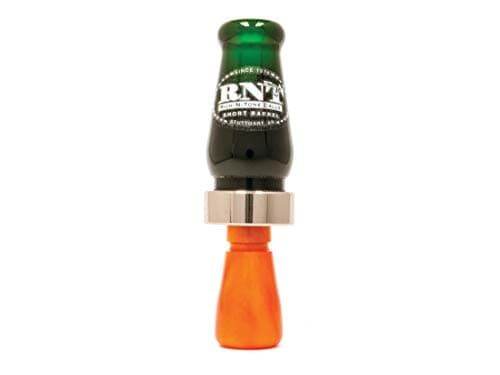
Closest thing to a cutdown sold on Amazon
RNT Short Barrel Acrylic Single Reed Duck Call
7.8 / 10RNT publishes this as a 4.25-inch call and describes it as easier blowing and medium volume, with a sound it calls snotty and whiney but not obnoxiously loud. A short barrel without a cutdown's reed set, which is the sane version of the idea.
$168.29Amazon#ad · Price as of November 2, 2026 · Affiliate disclosure for the link to RNT Short Barrel Acrylic Single Reed Duck Call
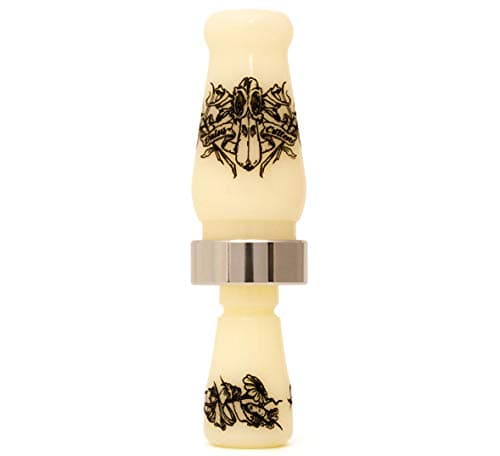
Standard length, cutdown attitude
RNT Daisy Cutter Acrylic Single Reed Duck Call
7.8 / 10RNT's own copy puts it above the Short Barrel: a higher reed set and a wider bore, louder, raunchier and more powerful, with the warning that this call may not be for everyone. Free tuning and a lifetime warranty that follows the call.
$159.95Amazon#ad · Price as of November 2, 2026 · Affiliate disclosure for the link to RNT Daisy Cutter Acrylic Single Reed Duck Call
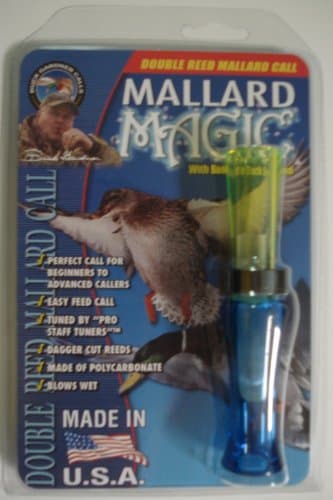
The standard a beginner should actually start on
Buck Gardner Mallard Magic Double Reed Duck Call
8.4 / 10A polycarbonate double reed with Cajun-style push-in guts that Buck Gardner says are easy for new hunters to learn, plus free retuning for the life of the call and a lifetime warranty on defects.
$27.42Amazon#ad · Price as of November 2, 2026 · Affiliate disclosure for the link to Buck Gardner Mallard Magic Double Reed Duck Call
What a cutdown duck call is
The term describes a modification, not a product line. Hunters in Arkansas took existing single-reed calls — most famously the old P.S. Olt models — cut material off the barrel, and retuned the reed higher in the toneboard. What came out was a call with very little barrel to resonate in, a reed under more tension, and an enormous amount of volume available for a modest amount of air. The style stuck, and today a number of small makers build purpose-made cutdowns from scratch rather than cutting up vintage calls.
That is worth stating plainly, because it also explains something about this page: a true cutdown is mostly a small-shop, direct-order product. It is not a category you will find stocked at scale on Amazon, and we do not list a product here that we cannot link to a live listing. What we can do is explain exactly what the modification does, because the same two variables — barrel length and reed set — are what separate every call in our registry, and the three calls on this page sit at three different points on that line.
What barrel length actually changes
A duck call barrel is a resonating chamber. Your air passes the reed, the reed vibrates, and the barrel shapes what comes out. Shorten it and three things happen.
Back pressure drops. A long barrel holds air against the reed, which is what lets you lean on a call and have it stay in tune. A short barrel lets the air out faster, so the reed responds more directly to how hard you blow — faster, sharper, and much less tolerant of a sloppy note.
The tone gets higher and harder. Less chamber means less of the low, round bottom end that a long-barrel call produces, and more of the whine and rasp off the reed itself. RNT's own description of its 4.25-inch Short Barrel is the clearest industry statement of this: it calls the sound “snotty, whiney, but not obnoxiously loud.” That is a short-barrel tone described by the people who build it.
Volume depends on where the reed is set, not on length alone. This is the part most explanations get backwards. RNT publishes its Short Barrel as medium volume and easier blowing — shorter, but not louder. Its Daisy Cutter is the standard-length call in the same line, and RNT describes it as having a higher reed set and a wider bore than the Short Barrel, and sounding “louder, raunchier, and more powerful.” Same maker, same single-reed design, and the longer call is the loud one. A cutdown is loud because its reed is set high and tight, and because it has been cut; the cut alone does not get you there.
Reed set is the real difference
If you take one thing from this page, take this: when hunters say a call is a cutdown, what they overwhelmingly mean in practice is an aggressive reed set. A high reed under tension needs more air pressure to start, breaks over into a hard, raspy note, and will blow out of control the moment your air gets inconsistent. It is the same reason RNT attaches an explicit warning to its loudest call — “this call may not be for everyone” — and why its own guidance positions the Short Barrel as the step up from a double reed rather than the Daisy Cutter.
The practical consequence is that the learning order matters more than the style. Start on a double reed, which holds its note when your air is imperfect because two reeds damp each other — that is the whole reason Buck Gardner describes the Mallard Magic's Cajun-style push-in guts as easy for new hunters to learn. Move to a short-barrel or medium-volume single reed when you can hold a clean, five-note greeting call without the call squealing. Only then does a high-reed cutdown make sense, and by then you will know whether you want one. The mechanics of each reed type are in single reed vs double reed duck calls.
One more reason to be patient: tuning. Every call on this page can be retuned, and the makers do it for free — Buck Gardner publishes free tuning for the life of the call for any owner with return shipping charged, and RNT publishes free tuning covered under a warranty that, in its words, follows the call rather than the owner. If a standard call is not giving you the aggression you want, having its reed reset by the maker is a free experiment. Cutting the barrel is not reversible.
The three calls side by side
Every figure below is from the maker's own product page, linked on the value, and every sound description is the maker's own claim rather than ours.
Read the warranty row carefully, because it is the most useful column on this page for anyone thinking about an aggressive call. Both RNT calls carry a lifetime warranty under which a broken call is fixed free if the part is returned, and the coverage follows the call rather than the owner. Buck Gardner publishes a lifetime warranty on defects in materials and workmanship for as long as you own the call, plus a published tune-up kit of plain reeds, dimple reeds, troughs and wedges. A call you can keep re-tuning is a call you can experiment with.
Who should own a cutdown
Buy a cutdown if you hunt flooded timber or green timber where you are calling loudly at close range into cover that eats sound, you already blow a single reed cleanly in a wind, and you want a hand-call with a hard, raspy break that gets a bird's attention in one note. That is a real and specific use case and it is why the style survives. Our best duck calls for timber page covers what timber actually asks of a call.
Buy a standard single reed if you want range — soft to loud on one call — and the ability to be heard across open water. A standard-length single reed with a high reed set, like RNT's Daisy Cutter, gets you most of a cutdown's aggression with a barrel that still gives you back pressure to work against. See best duck calls for open water.
Buy a double reed if you are in your first two seasons, or if you hunt with other people and want the call that sounds acceptable on a bad morning. Two reeds forgive inconsistent air, which is exactly what a new caller has. Start at best duck calls for beginners, and the whole category is ranked at best duck calls.
Do not buy a cutdown as a first call, whatever anyone tells you about how ducky it sounds in a video. A call that rewards perfect air and punishes everything else is the slowest possible way to learn, and the ducks hear the mistakes. Learn the notes on something forgiving — see how to blow a duck call — and buy the aggressive call when you have a reason for it.
In detail
Every contender, in full
Closest thing to a cutdown sold on Amazon
RNT Short Barrel Acrylic Single Reed Duck Call
Scored on the duck & goose calls rubric
RNT publishes this as a 4.25-inch call and describes it as easier blowing and medium volume, with a sound it calls snotty and whiney but not obnoxiously loud. A short barrel without a cutdown's reed set, which is the sane version of the idea.
Published specs (tap for source)
- Reed system & ease of learning (30%)
- 6
- Material & build (20%)
- 8
- Tunability & serviceability (20%)
- 10
- Sound range (maker's claim) (15%)
- 6
- Warranty (15%)
- 10
What it gets right
- Maker says the shorter barrel makes it easier to blow and lets you call softly
- Reed sets sold, and tuning is free
- Warranty covers breaks for any reason
What it doesn't
- Still a single reed, so it needs more air control than a double
- Maker calls it medium volume, so it is not the pick for long-range calling
Skip it if…
…you mostly call to distant flocks over big open water; RNT rates it medium volume and sells the louder Daisy Cutter.
#ad · Price as of November 2, 2026 · Affiliate disclosure for the link to RNT Short Barrel Acrylic Single Reed Duck Call
Standard length, cutdown attitude
RNT Daisy Cutter Acrylic Single Reed Duck Call
Scored on the duck & goose calls rubric
RNT's own copy puts it above the Short Barrel: a higher reed set and a wider bore, louder, raunchier and more powerful, with the warning that this call may not be for everyone. Free tuning and a lifetime warranty that follows the call.
Published specs (tap for source)
- Reed system & ease of learning (30%)
- 4.5
- Material & build (20%)
- 8
- Tunability & serviceability (20%)
- 10
- Sound range (maker's claim) (15%)
- 9
- Warranty (15%)
- 10
What it gets right
- RNT's own description places it above the Short Barrel for volume and drive
- Reed sets sold, and tuning is free
- Warranty covers breaks for any reason and transfers with the call
What it doesn't
- Single reed that RNT itself says "may not be for everyone"
- Insert material not stated separately from the barrel
Skip it if…
…this is your first duck call; the maker describes it as a call you have to be able to drive.
#ad · Price as of November 2, 2026 · Affiliate disclosure for the link to RNT Daisy Cutter Acrylic Single Reed Duck Call
The standard a beginner should actually start on
Buck Gardner Mallard Magic Double Reed Duck Call
Scored on the duck & goose calls rubric
A polycarbonate double reed with Cajun-style push-in guts that Buck Gardner says are easy for new hunters to learn, plus free retuning for the life of the call and a lifetime warranty on defects.
Published specs (tap for source)
- Reed system & ease of learning (30%)
- 8.5
- Material & build (20%)
- 7
- Tunability & serviceability (20%)
- 10
- Sound range (maker's claim) (15%)
- 7
- Warranty (15%)
- 9
What it gets right
- Maker says the guts are "easy for new hunters to learn" yet customizable
- Free retuning for the life of the call, plus a matching tune-up kit
- Lifetime warranty on defects
What it doesn't
- Insert material not stated separately from the polycarbonate barrel
- Buck Gardner says double reeds give up some volume and tonal range compared with single reeds
Skip it if…
…you already run a single reed well and need maximum volume for big open water.
#ad · Price as of November 2, 2026 · Affiliate disclosure for the link to Buck Gardner Mallard Magic Double Reed Duck Call
How we picked
Why these made the list
Every pick here is researched and compared against the maker's published specs, manuals and warranty terms, scored on a rubric we publish, with each source linked at the bottom of the page.
The weights below are the ones each score was actually computed with, and they hold on every page a product appears on, so the order you see is the order the numbers give. Nobody pays for placement. See every rubric and weight.
Duck & goose calls rubric
- Reed system & ease of learning
- 30%
- Material & build
- 20%
- Tunability & serviceability
- 20%
- Sound range (maker's claim)
- 15%
- Warranty
- 15%
FAQ
Questions hunters ask
What is a cutdown duck call?
Does a shorter barrel make a duck call louder?
Are cutdown duck calls good for beginners?
What is the difference between a cutdown and a short barrel call?
Can you have a standard duck call cut down?
Do cutdown calls work outside of timber?
Related
Keep reading
- Single reed vs double reed duck callsThe reed decision that matters more than barrel length.
- Best duck calls for timberWhere an aggressive short call earns its place.
- Best duck calls for open waterThe opposite problem: range instead of attack.
- Best duck calls for beginnersWhat to learn the notes on first.
- How to blow a duck callThe notes, in the order worth learning them.
- Acrylic vs wood duck callsThe other material question on the same calls.
Update log
What changed
- First published.
Receipts
Sources
- 1.RNT Calls: Short Barrel product page (checked Sep 19, 2026)
- 2.RNT Calls: Daisy Cutter product page (checked Sep 19, 2026)
- 3.RNT Calls: Services, tuning and warranty policy (checked Sep 19, 2026)
- 4.Buck Gardner Calls: Mallard Magic Double Reed Duck Call product page (checked Sep 19, 2026)
- 5.Buck Gardner Calls: Our Call Tuning Services (checked Sep 19, 2026)
- 6.Buck Gardner Calls: Lifetime Warranty (checked Sep 19, 2026)
Specs, materials and warranty terms come from the maker's own pages and manuals (or a named retailer's listing where the maker doesn't publish them), and every one is linked above. Regulations are linked to the agency that writes them. Prices are set by Amazon and change often, so the current number lives on the buy button rather than in the copy. Read the full method.